Developer Spotlight: Emre Ergül’s Guide to Creative Challenges, from Picking an Idea to Hitting Submit
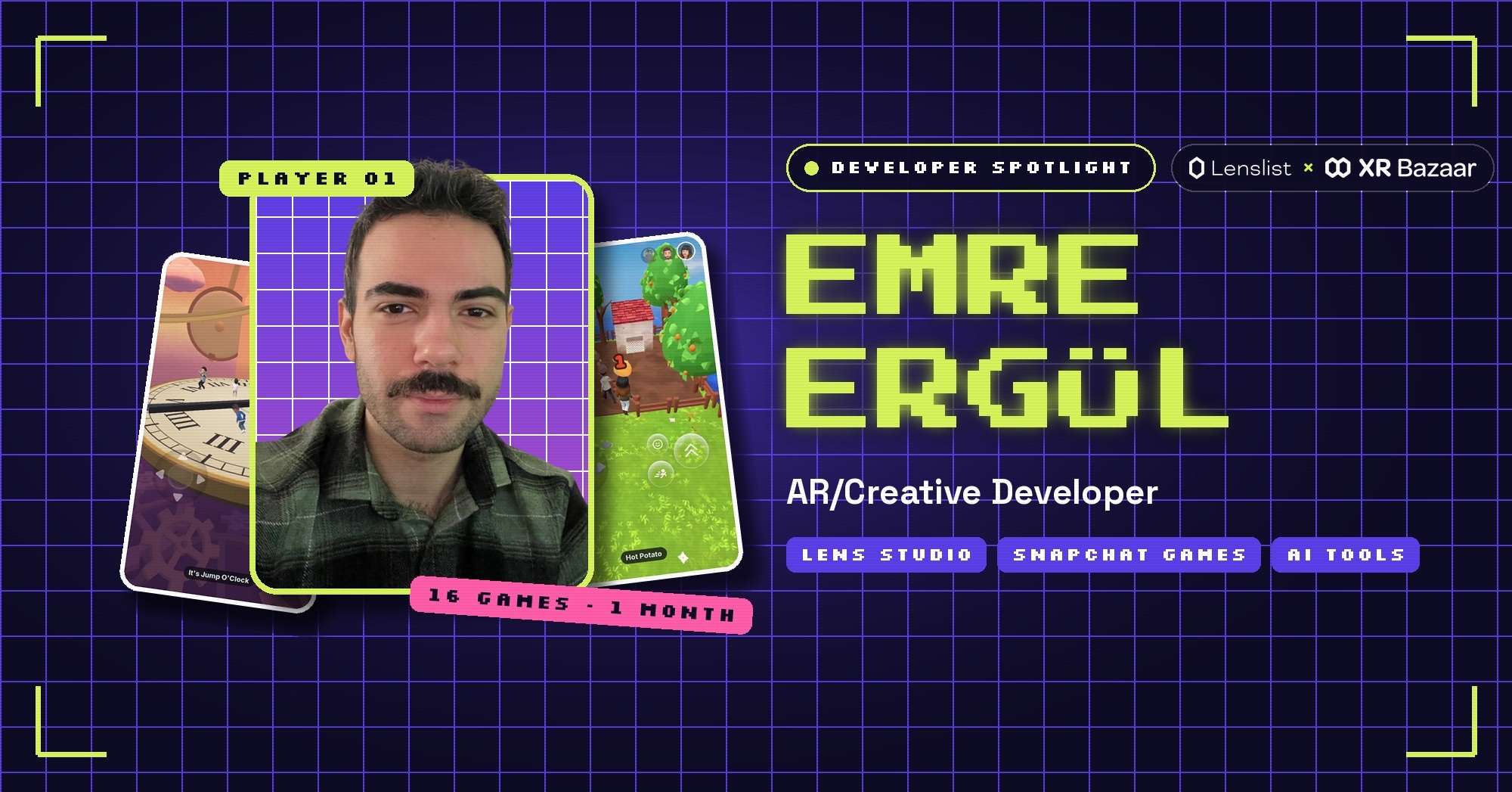
How do you choose an idea that’s ambitious enough to teach you something new and small enough to finish by the deadline? For AR developer and game creator Emre Ergül, it starts with sketching out five to ten rough ideas before committing to one. He weighs how well each fits the brief, whether the core experience would be fun, and whether a short preview could show people what makes it worth trying.
In this Developer Spotlight, Emre shares practical tips for every stage of a creative challenge, from narrowing down ideas to designing an AR interaction people can understand in seconds. He also talks about using AI tools to build 16 game experiences in a month while keeping creative decisions in his hands, and what he’s looking forward to building as Snapchat opens up more possibilities for multiplayer games.
You’ve taken part in many creative challenges. How do you choose an idea that feels ambitious yet achievable? Do you usually build on your existing skills or use the opportunity to try something new?
Most of the time, I split my process into two parts, an ideation phase and a production phase. In the ideation phase, I try to come up with 5-10 rough ideas first, by looking at the examples, getting inspiration from various sources, and just imagining the completed version of the ideas. Then I decide on the top 2-3 of them.
That filtering comes down to many questions, like “Is it aligned enough with the given theme?” “Would the core experience be enjoyable?” “Can I create the preview in a way that captures that experience?” Since I’ve been doing this for a long time, it has turned into a kind of intuition. I don’t ask the questions one by one, but deciding the top ideas comes from many questions like these.
While carrying my existing skills into the challenges feels safe, I always try to expand what I’m capable of, because what’s existing today was once something new anyway.
What do you value most about creative challenges? Do the themes and deadlines help you focus, or is something else the biggest draw?
I have so many ideas I want to try out, but at the end of the day, 1 completed project is better than 10 big ideas for me.
What would you like to explore next as a creator?
I think it’ll be more and more important to use them as enhancers rather than a replacement for the whole process.
I’d also love to work on bigger projects with brands and teams again. At my previous company, QReal, I had the chance to work with amazing teammates on lenses for global brands, and I learned so much from them. Challenges taught me how to take an idea from start to finish on my own. I’d like to bring that into larger collaborations where a team can push an idea much further.
Lastly, I’d like to lean into sharing my work and processes more often in different mediums. I’ve always felt that it was as important as creating the thing, but lately I’ve been putting more conscious effort into it, and my plan is to get better at it.
AR effects often have only a few seconds to capture someone’s attention. How do you make an interaction easy to understand while giving people a reason to keep exploring beyond that first impression?
I also put a lot of emphasis on showing an intriguing intro for people, because if I’m confident about the thing I created, I need to show people something visually enticing to show them that it’s worth their time.
You’ve created plenty of games for Snapchat. What draws you to this format, and how do additions like Web Games and multiplayer matchmaking expand what you can create?
My friend Reşat and I presented our indie game prototypes at Gaming Istanbul twice. That was one of the reasons I could easily get familiar with Lens Studio in the first place, because of its similarities with most game engines.
Snapchat’s emphasis on games has really expanded the possibilities. I couldn’t really imagine having 4 people in a Snapchat lens playing a game in real time, now it’s a reality we can build upon. I wonder what’s next?
Put Your Next Idea To The Test
Before you start building for your next challenge, try describing the core interaction in one sentence. What will someone do, and what will make them want to do it again? Then think about the preview. If you only had a few seconds to show the experience, which moment would you pick? Answering those questions early can help you decide what to build first and what can wait.
A challenge brief gives you a theme to work with and a date to work toward. Use that structure to choose one thing you want to learn, give yourself time to polish the interaction, and get the project out into the world.
As Emre puts it, 1 completed project is better than 10 big ideas.