Meta Connect 2026: Biggest Announcements & the Direction Meta Is Heading
Meta Connect 2026 kicked off on September 23, with Mark Zuckerberg taking the stage to introduce the company’s biggest upcoming releases. And if there’s one thing to take away from this year’s keynote, it’s that Meta is working toward a future where computing is no longer tied to a screen.
AI glasses took center stage, with Meta introducing its first audio-only Ray-Bans, the third generation of Ray-Ban Meta, new Meta Glasses styles and features, and deeper integration with its personal AI agent, Muse.
But the company also took a major step forward in VR, surprisingly, not with Meta Quest. The keynote introduced a new pair of 100-gram Meta VR Glasses designed for everything from spatial productivity and gaming to movies and immersive live sports.
It’s a device much lighter than previous headsets, and one that further demonstrates Meta’s goal of designing technology that blends with reality.
We’re reporting directly from Meta Connect 2026, so here’s everything announced during the keynote – and what it tells us about where Meta is heading next.

Muse Is Coming to Meta’s AI Glasses
Meta’s own AI agent is coming to AI glasses.
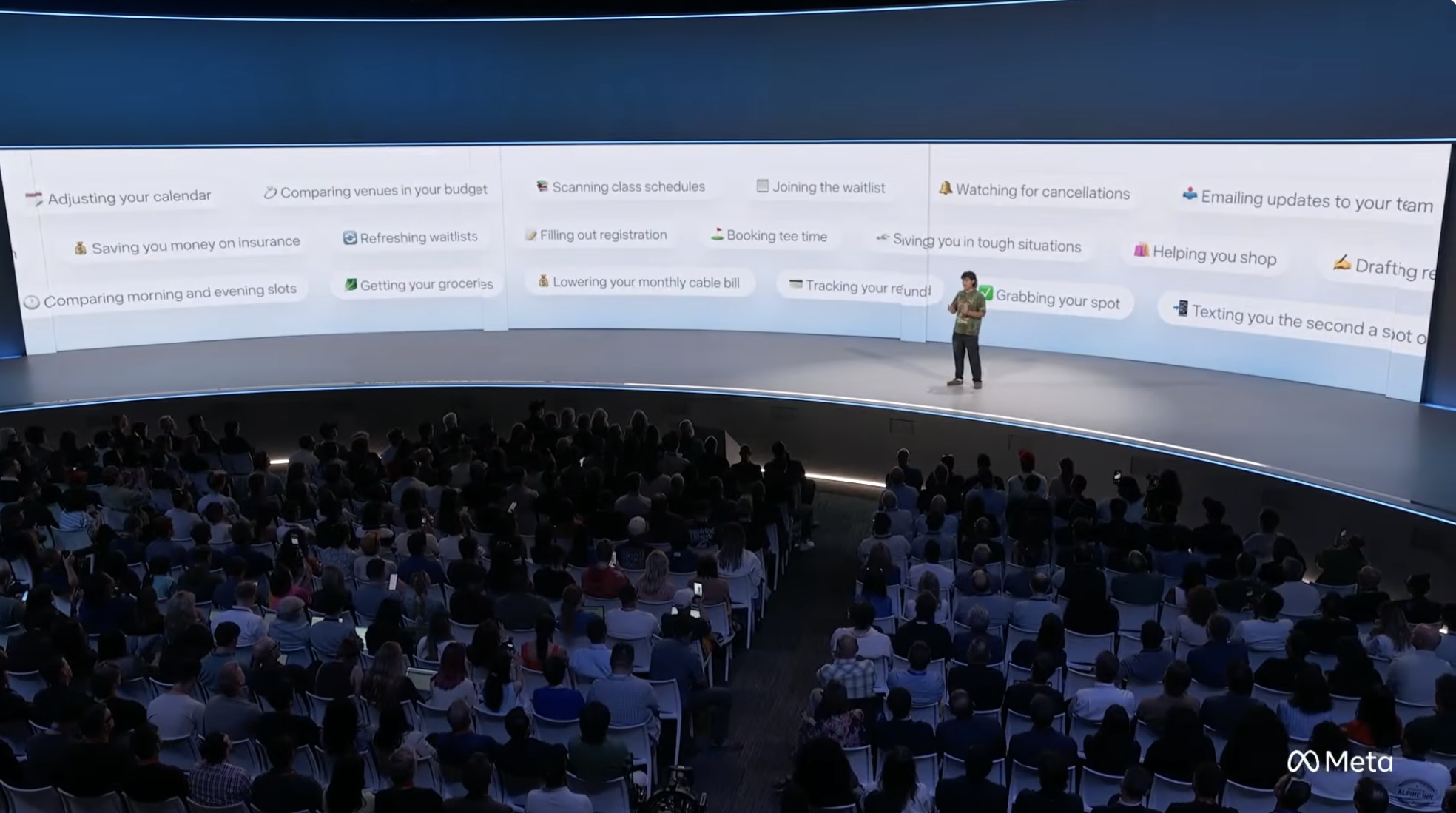
It’s technology designed not only to answer questions, but also to complete tasks on the user’s behalf, leaving their hands and eyes free from the screen.
Muse can already handle actions such as sending emails, booking travel, filling out forms and shopping online. It can also work on longer-term goals and remember relevant context from previous interactions. For sensitive actions, such as sending an email or completing a purchase, Muse asks for confirmation before proceeding.
Users will be able to talk to Muse throughout the day while it has access to the context provided by the glasses.

Meta also announced real-time voice conversations, Realtime Avatar capabilities and computer use on Mac, alongside integrations with services including Walmart, Best Buy, Expedia, Instacart, Notion, GitHub and Box.
The company is also developing Muse Charm, a standalone device for accessing the agent.
Ray-Ban Meta Audio: Smart Glasses Without the Camera
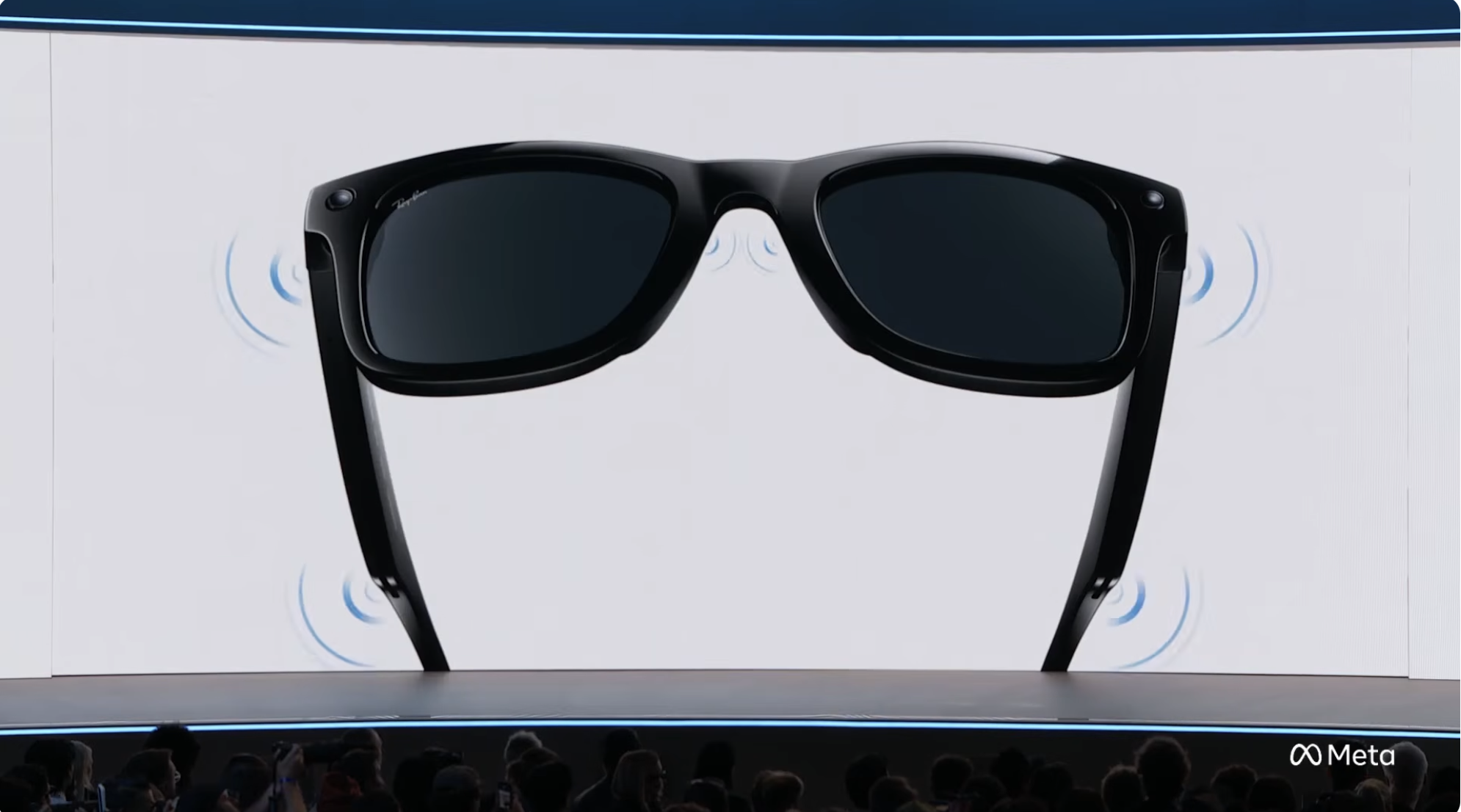
Meta also introduced Ray-Ban Meta Audio, its first pair of AI glasses built entirely around audio, with no camera.
At 43 grams, they are Meta’s lightest and slimmest AI glasses so far. Open-ear speakers let users listen to music and podcasts, take calls and interact with Meta AI while remaining aware of their surroundings.
The glasses offer up to 12 hours of battery life, with the charging case providing up to another 48 hours. Meta and Ray-Ban have also added professionally adjustable temple tips, interchangeable or adjustable nose pads and overextension hinges to make them more comfortable for all-day wear.
Ray-Ban Meta Audio comes in Clubmaster and Burbank styles, with 23 frame and lens combinations and support for prescription lenses.
Prices start at $349, with shipping beginning October 13.
Removing the camera makes this an interesting addition to Meta’s strategy. Instead of treating every pair of smart glasses as a device for capturing the world, Meta is also creating a more discreet wearable focused on listening, calling and accessing AI.

Ray-Ban Meta Gen 3
For users who do want a camera, Meta and Ray-Ban also announced the third generation of Ray-Ban Meta.
The new model gets a slimmer design, adjustable temple tips and a customizable action button that provides quicker access to Meta AI.
Inside, there’s a 12 MP camera capable of recording 3K Ultra HD video, alongside dynamic photos that let users select the best frame from a captured moment.
Audio is getting an upgrade too. A new six-microphone array is designed to cut more than 90% of background noise during calls and voice interactions. Battery life reaches up to nine hours, an hour more than the previous generation.
Gen 3 is available across Aviator, Zena and Wayfarer designs, with 27 frame and lens combinations. A limited-edition Aviator is also being released to celebrate the frame’s 90th anniversary.
Ray-Ban Meta Gen 3 starts at $449.
More AI Glasses Styles
Meta wants its technology to be more than just a device. It’s an accessory first, and it needs to reflect the unique style of its wearer. That’s why the company announced more collaborations, new Capri and Nova frame shapes, and additional limited editions.
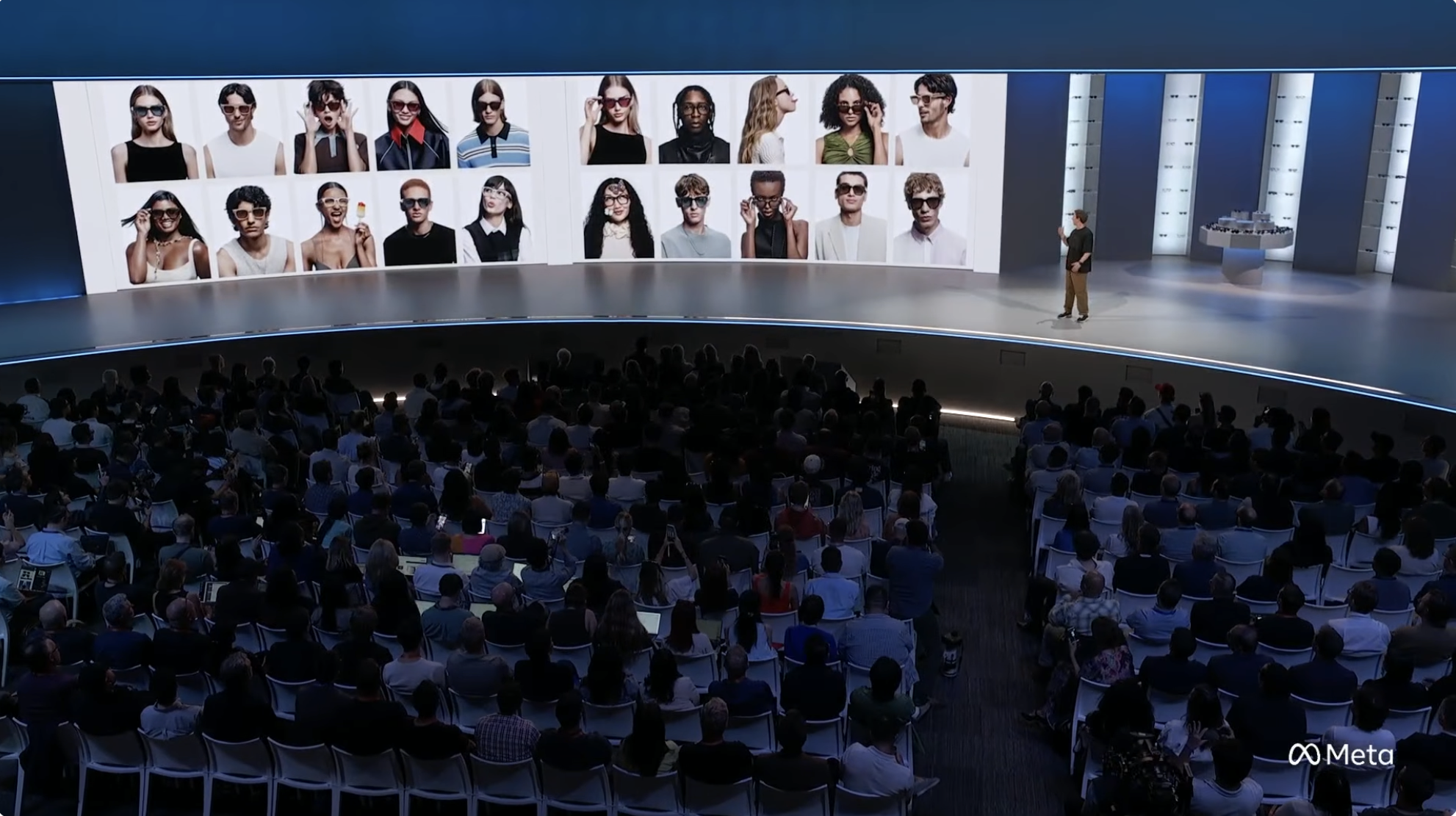
A new LISA collection includes Adventurer and Capri frames with custom details and digital collectibles, while Meta is also introducing another Kylie Jenner colorway.
At the more accessible end of the lineup, the new Meta Adventurer starts at $249, making it Meta’s lowest-priced glasses option so far. A limited-edition Meta Fury with a transparent frame and mirrored lenses will initially be available through Connect and Meta Labs.
Users will also have more control over their glasses through Meta’s Mix & Match program, which allows them to choose their preferred combination of frame, lenses and case.
The collection is expanding geographically too. Meta Glasses are launching in Singapore, South Korea, Mexico and the UAE, with Brazil coming next. Other parts of Meta’s glasses portfolio are also scheduled to expand into additional markets.
By the end of 2026, Meta plans to offer more than 100 AI glasses options across Ray-Ban, Oakley and Meta Glasses.
Meta Ray-Ban Display Updates
Meta also announced a set of updates for Meta Ray-Ban Display, expanding what users can do directly from their glasses.
Navigation is one of the biggest additions. Users will be able to ask for cycling directions and real-time public transit information using voice commands, with directions appearing directly in the display.
Walking navigation is also becoming more contextual. Instead of relying entirely on street names, the glasses can use visible landmarks when giving directions, telling you to turn at a recognizable building, for example.
Meta is also introducing Hologram, which creates a photorealistic digital version of the wearer for video calls. After completing a short capture process, the avatar can represent the wearer during hands-free calls, with expressions inferred from their voice.
Hologram is expected to enter Early Access on WhatsApp in the US this fall.
Another new addition is Explore, an on-glasses destination for discovering apps and experiences made specifically for Meta Ray-Ban Display.
Calendar controls are expanding as well, allowing users to view attendees, respond to invitations and join meetings from their glasses. Mirrored phone notifications are also coming to the display.
Meta Ray-Ban Display is expanding beyond the US too. Sales have begun in Canada and the UK, while France, Italy and Germany will follow on October 13.
Meta VR Glasses Put Spatial Computing Into a 100-Gram Device
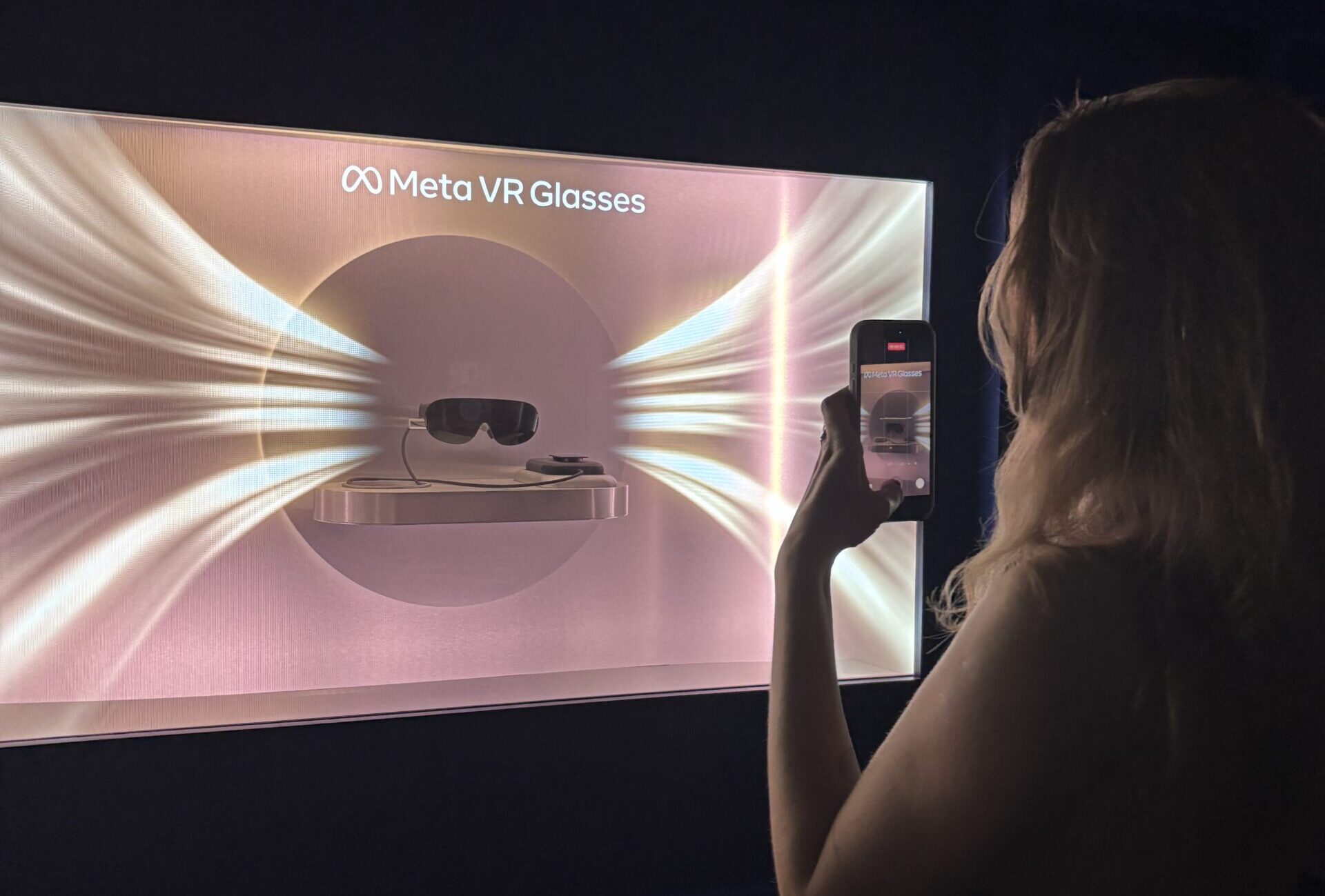
One of the biggest hardware announcements of Connect 2026 turned out to be Meta VR Glasses.
Instead of another Quest-style headset, Meta has reduced its next VR device to a pair of glasses weighing approximately 100 grams – around five times lighter than Quest 3.
The trick is a two-part design.
The glasses themselves contain the displays and sensors, while an external puck connected through an optical tether houses the processor, battery and storage. The puck can be clipped onto clothing or placed in a pocket, removing much of the weight that would otherwise sit on the user’s face.
The glasses feature a 5K Infinite Display built around micro-OLED panels, delivering 37 pixels per degree through custom pancake lenses. Dolby Vision handles visuals, while Dolby Atmos spatial audio is integrated directly into the frames.
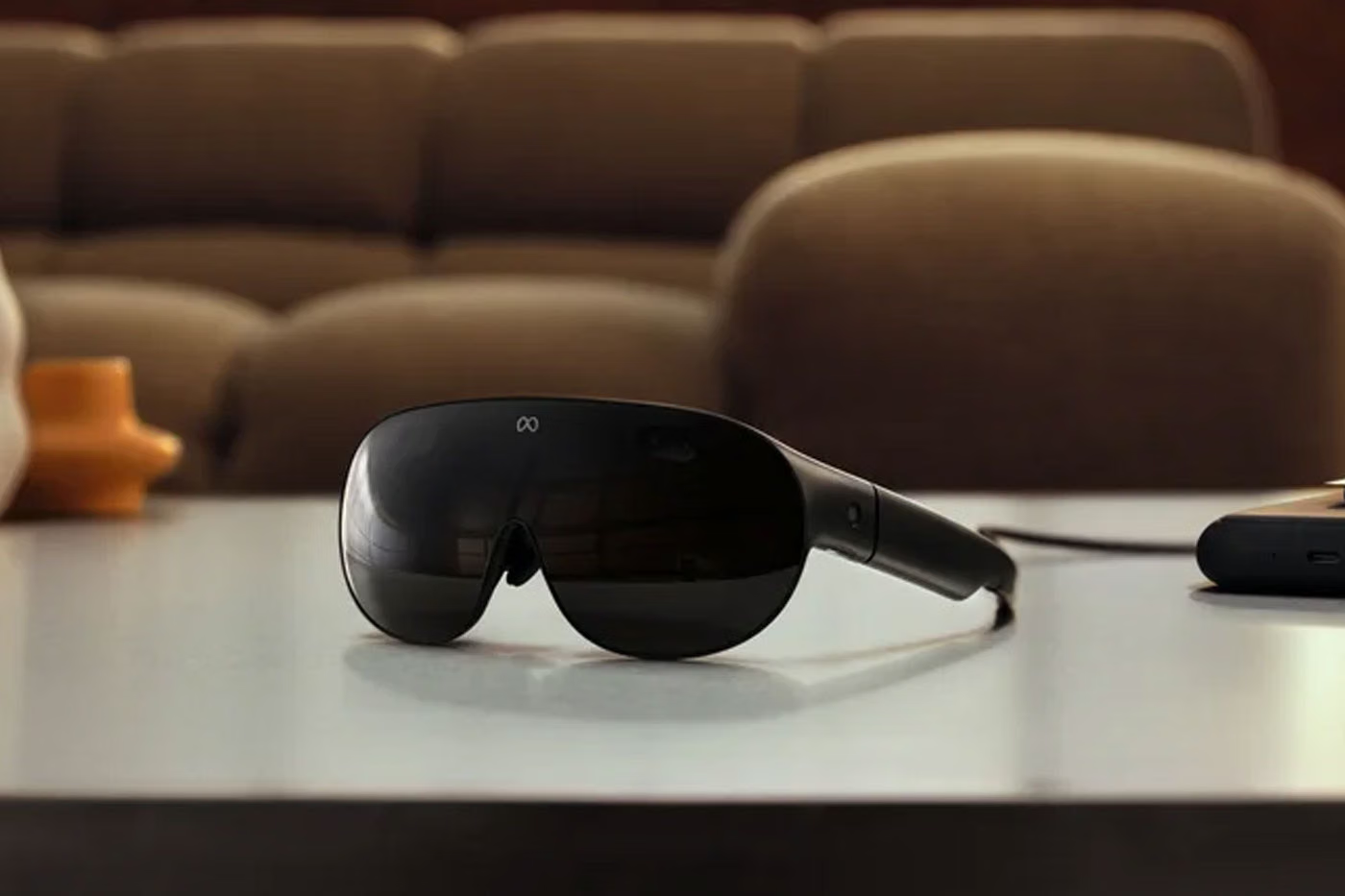
Full-color passthrough and the open-sided design allow users to maintain awareness of their physical surroundings while using the device.
Interaction happens through a combination of eye tracking, hand gestures and voice. And unlike lightweight AI glasses, these are designed to provide full spatial computing.
What Can You Actually Do With Meta VR Glasses?
Meta is positioning its new VR Glasses as much more than a gaming device. The main use cases presented at Connect span productivity, entertainment, sports and gaming:
👉 Work: Create multiple virtual displays and turn any flat surface into a virtual keyboard and touchpad, creating a portable spatial workspace without physical monitors.
👉 Movies & TV: Watch 3D and IMAX Enhanced content, with Disney+, Prime Video, YouTube and other streaming platforms joining the ecosystem. Meta is also working with James Cameron and Lightstorm Vision on new 3D experiences.
👉 Live sports: Watch immersive 8K, 180-degree broadcasts, with ESPN, MLB, NBC Sports, TNT Sports and UFC among the announced partners. Meta plans to offer more than 100 immersive live sporting events per year in the US.
👉 Gaming: More than 75 games will support hand controls at launch, while Xbox Cloud Gaming will provide access to hundreds more. New VR titles are also coming, alongside Flux, a new hand-tracking mode for Beat Saber.
Meta VR Glasses will launch in spring 2027 for $1,299.99.
What Meta Connect 2026 Tells Us About Meta’s Future
If previous generations of smart glasses were largely about proving that cameras, speakers and AI could fit into a socially acceptable pair of frames, Meta Connect 2026 showed what happens next.
The company is building several layers of wearable computing at once.
Muse provides the intelligence. AI glasses provide the everyday interface. Meta VR Glasses provide the immersive computing layer.
The first layer can understand requests and take action. The second stays with you as you move through the physical world. And the third can transform that world into a workspace, cinema, gaming environment or virtual venue when greater immersion is needed.
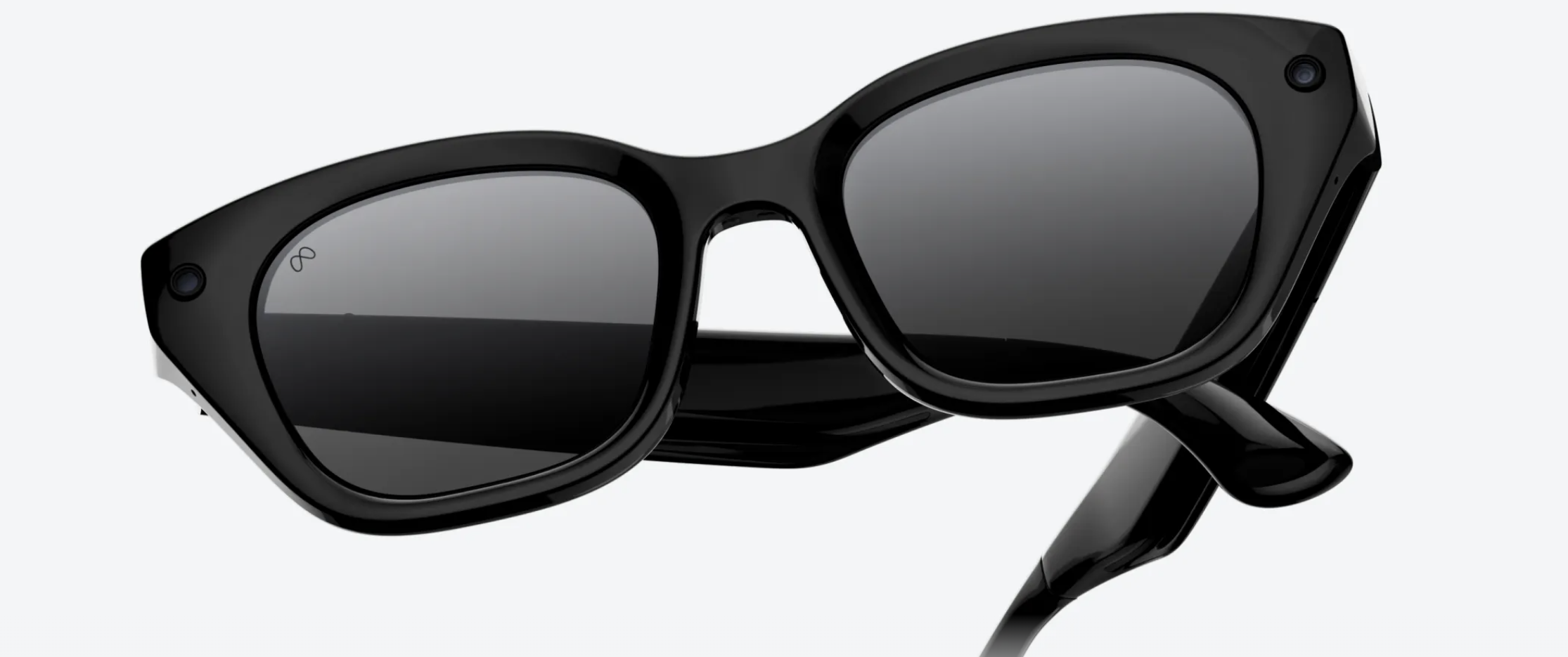
Everything about this strategy makes Meta’s plans increasingly clear: the company wants to move computing beyond screens, making technology easier to access and integrate into everyday life through both its design and capabilities.
Everything Meta announced at Connect 2026 is focused on everyday users and how technology can better fit into – and serve – their daily lives.