Samsung & XREAL: Google’s Vision for Smart Glasses 👓
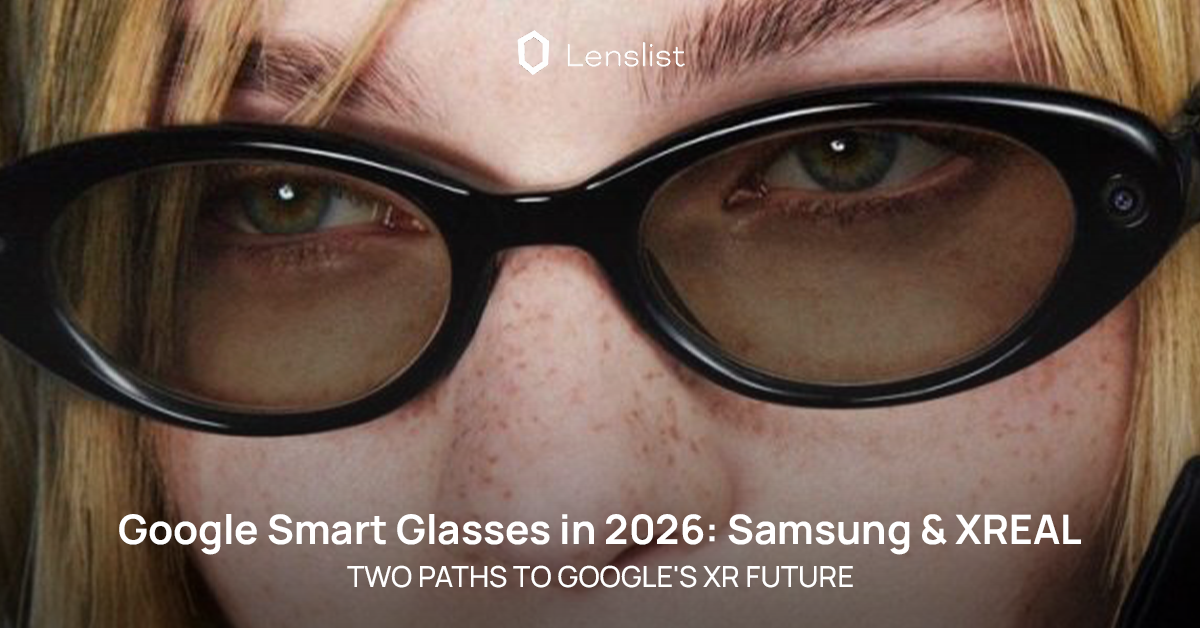
The race to redefine personal computing is accelerating, with 2026 shaping up to be the year of smart glasses.
With Meta AI Glasses, Even Realities G2s and Snap’s Spectacles (and soon also SPECS) already making their mark in the industry, Google is taking a broad approach by partnering with multiple hardware manufacturers to bring Android XR to life with Project Aura as well as compete in the AI wearables division with Gemini-enabled lightweight smart glasses designed with Gentle Monster and Warby Parker.
At Google I/O 2026, Google showcased two different visions for the future of wearable computing. Together with Samsung, the company unveiled AI-powered smart glasses designed for everyday use, while its collaboration with XREAL introduced Project Aura, XR glasses focused on immersive spatial computing.
Although the two devices target different use cases, they share the same foundation: Android XR and Gemini AI. Together, they demonstrate Google’s ambition to build an ecosystem that spans everything from hands-free AI assistance to fully immersive extended reality experiences.
Google’s Two Approaches to Smart Glasses
Rather than relying on a single device, Google is collaborating with different hardware partners to bring Android XR to a wider audience.
Samsung’s smart glasses focus on making AI a natural part of everyday life. Designed to look and feel like regular eyewear, they’ll initially offer audio-first interactions through built-in speakers, helping users stay connected without constantly reaching for their phones.
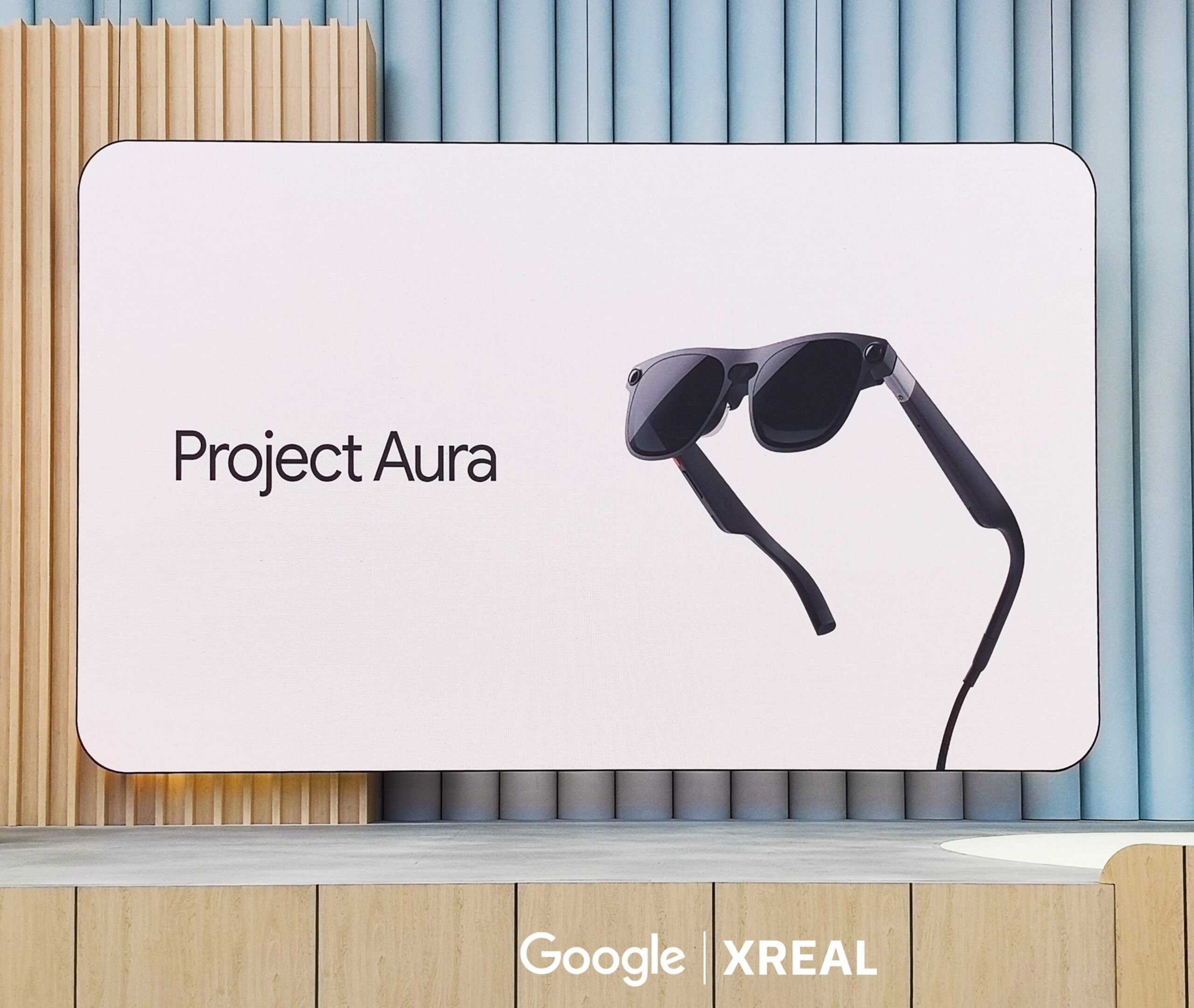
Project Aura, developed by XREAL in collaboration with Google and Qualcomm Technologies, takes a different approach. The wired XR glasses are built around immersive displays and spatial computing, showing what’s possible when lightweight yet powerful hardware is combined with Android XR and Gemini.
While Samsung’s glasses aim to simplify everyday tasks, Project Aura is designed to unlock richer XR experiences for developers, creators, and early adopters.
Samsung Smart Glasses: Gemini Assistance for Everyday Life
As smartphones remain at the center of our digital lives, tech giants like Meta, Snap, and now Google and Samsung, are betting that the next major platform will be AI-powered smart glasses, designed to keep users hands-free and heads-up.
Introduced during Google I/O 2026, Samsung and Google unveiled their vision for intelligent eyewear powered by Gemini AI. The first generation, focused on audio assistance through built-in speakers, is expected to launch this fall, with display-equipped models planned for a later release.
The devices combine Samsung’s hardware expertise, Google’s AI ecosystem, and premium eyewear design from partners Gentle Monster and Warby Parker.
So what can these glasses actually do?
Gemini Assistance & Key Features
At the heart of Samsung’s smart glasses is Gemini, Google’s AI assistant. It can be activated simply by saying “Hey Google” or with a quick tap on the frame.
Instead of constantly reaching for your phone, the glasses are designed to help with everyday tasks while letting you stay present in the real world. Goodbye to the world of constantly having your eyes glued to a screen. Digital assistance is still there, but without disrupting reality.
Here’s what you’ll be able to do with the Google x Samsung smart glasses:
👀 Ask about what you see. With the built-in camera, Gemini can identify landmarks, objects, products, or signs and answer questions about your surroundings.
🗺️ Navigate naturally. Receive turn-by-turn directions based on where you’re looking, with AI-powered recommendations for nearby places and additional stops.
💬 Stay connected. Make calls, send messages, and hear summaries of missed notifications without taking your phone out of your pocket.
📸 Capture & edit. Take photos and videos with your voice, then instantly enhance or transform them using Google’s AI tools.
🌍 Translate in real time. Translate conversations, menus, and signs with natural-sounding audio while looking directly at the world around you.
☕ Delegate everyday tasks. Ask Gemini to order coffee, book a ride, or complete other multi-step actions, only the final confirmation is left to you.
📱 Use your favorite apps. Access services like Uber and Mondly through voice commands. The glasses are compatible with both Android and iPhone.
Stylish Design to Fit Your Needs
“Stylish on the outside, intelligent on the inside“ That’s how Google introduces its intelligent eyewear, and its collaborations with two of the top eyewear brands reflect that philosophy perfectly.
Rather than creating a futuristic gadget that feels out of place, Samsung and Google want their glasses to blend naturally into everyday life. To achieve that, they’re partnering with two eyewear brands known for completely different, but equally premium aesthetics. At Google I/O 2026, the company shared a sneak peek at two styles from the upcoming collection.
At Samsung’s Galaxy Unpacked, the company introduced more key features and different styles developed in collaboration with Gentle Monster and Warby Parker, offering users a choice between a bold fashion statement and a timeless everyday look.
Samsung did not disclose the price of the glasses but said it was positioning the device as a “premium” product.
Throughout the design process, Samsung worked closely with both eyewear partners to refine key fit points, including the forehead and ears. These insights helped shape glasses that prioritize comfort, durability, and reliable everyday wear, with fit considerations tailored to each individual design.
Warby Parker
Warby Parker brings its signature minimalist design language and prescription eyewear expertise to the project. The showcased style features a subtly upswept brow line in a rich brown hue, creating a refined, versatile shape designed for everyday settings.
The result is a collection built around everyday wearability:
➡️ Timeless frame designs
➡️ Clean, understated aesthetic
➡️ Classic “New York coffee shop” style
➡️ Easy to pair with daily outfits
➡️ Designed to blend in rather than stand out
“Eyewear is deeply personal, which is why every detail matters when integrating advanced technology into frames people wear every day,” said Dave Gilboa, Co-Founder and Co-CEO of Warby Parker.
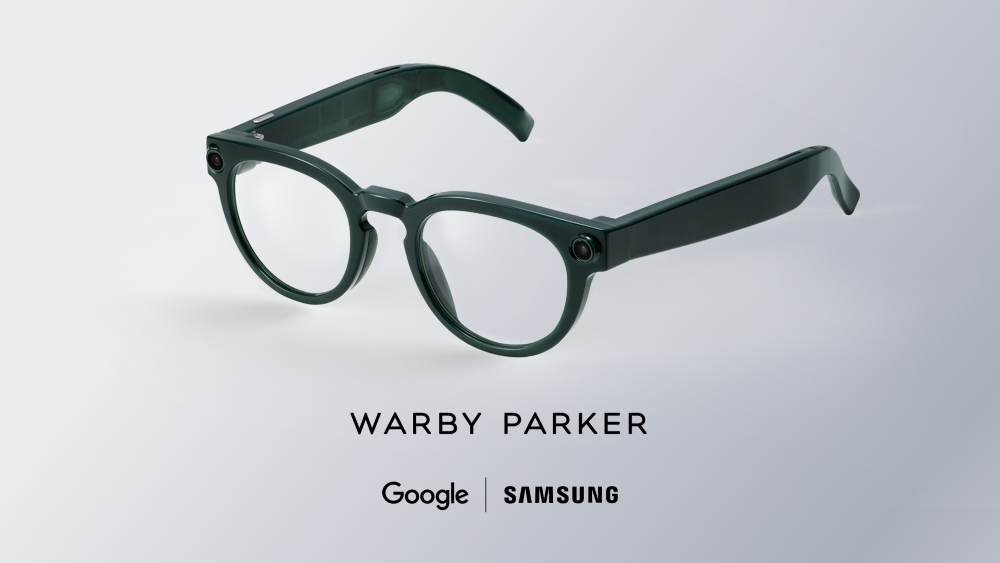 Source: Google
Gentle Monster
Known for pushing the boundaries of fashion, Gentle Monster takes the opposite approach. The version unveiled by Samsung features a slim black frame that combines a straight upper rim with softly rounded lower edges, creating a refined, fashion-forward silhouette.
As expected from the brand, the glasses embrace expressive styling and feel more like a luxury fashion accessory than a piece of consumer electronics. Expect:
➡️ Sharp, contemporary silhouette
➡️ Sleek black finish
➡️ Premium fashion aesthetic
➡️ Futuristic, sci-fi-inspired design
➡️ Made to stand out
“Intelligent eyewear should feel as emotionally expressive as it is technologically advanced,” said Hankook Kim, Founder and CEO of Gentle Monster.
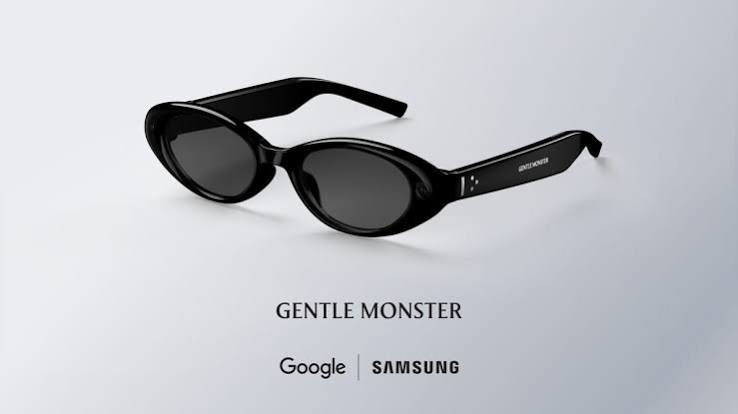 Source: Google
Project Aura: Google’s Vision for Immersive XR
Alongside Samsung’s smart glasses, Google also used Google I/O 2026 and later the AWE conference to showcase Project Aura, upcoming wired XR glasses developed in collaboration with XREAL and Qualcomm Technologies.
Project Aura represents a different side of Google’s wearable strategy. Rather than focusing primarily on AI assistance, the device is built around immersive spatial computing powered by Android XR, Gemini, and XREAL’s lightweight XR hardware.
During Google I/O, attendees experienced a series of live demonstrations that highlighted what’s possible with Project Aura, including:
🔹 Immersive Google Maps navigation in three-dimensional space
🔹 Massive virtual displays for entertainment and multitasking
🔹 YouTube 180° and 360° videos displayed across the glasses’ 70-degree field of view
🔹 WebXR creative experiences, including a 3D painting application built with Gemini
🔹 Laptop connectivity that extends AI-powered workflows into spatial AR workspaces
🔹 Next-generation Android XR games and interactive experiences
 Source: Google
FOR DEVELOPERS 🛠️
One of the biggest advantages of building for Google Glasses isn’t just the hardware. It’s the unified Android XR ecosystem behind it. Whether you’re building for Samsung’s Gemini-powered smart glasses or XREAL’s Project Aura, both devices are part of the same foundation: Android XR.
For developers, this means a unified platform for creating AI-powered and spatial experiences across different types of XR devices. Instead of building separately for every new piece of hardware, developers can use shared tools, APIs, and frameworks to experiment with the future of wearable computing.
The main toolkit for Android XR development is the Jetpack XR SDK — a collection of libraries and tools designed to help developers create immersive and AI-powered experiences using familiar Android workflows.
Developers can build experiences, including:
➡️ AI-powered applications for smart glasses
➡️ Spatial interfaces and 3D experiences
➡️ Mixed reality applications
➡️ Hands-free, context-aware experiences powered by cameras, microphones, and sensors
If you already develop for Android, the transition is designed to feel familiar. Android XR builds on existing Android tools, APIs, and development workflows.
Getting started with Android XR
Ready to start building? Here’s the recommended roadmap:
1. Set up your development environment
Start by preparing your tools:
✅ Install the latest Android Studio Canary build
✅ Set up the Jetpack XR SDK
✅ Install the Android XR Emulator for testing
Learn more 👉 here
Android XR development requires:
Minimum SDK: Android 24+
Compile SDK: Android 34+
2. Create your first XR project
You can either adapt an existing Android app or start with a dedicated XR template. To create a new project:
➡️ Open Android Studio
➡️ Select New Project
➡️ Choose an XR template
➡️ Select the type of experience you want to build
➡️ Add the required Jetpack XR SDK libraries
Existing Android apps can also be extended with XR features instead of being rebuilt from scratch.
Learn more 👉 here
3. Choose your development stack
Android XR supports multiple development paths depending on your experience and project goals:
➡️ Jetpack XR SDK. The native Android approach, using tools like Jetpack Compose for XR, Jetpack Compose Glimmer, ARCore for Jetpack XR, and Jetpack Projected.
➡️ Unity, Unreal Engine & Godot. Options for creators building advanced 3D experiences, games, and interactive environments.
➡️ OpenXR. A cross-platform standard that helps developers create XR applications across different devices.
➡️ WebXR. A browser-based approach for creating accessible XR experiences through the web.
4. Test before getting the hardware
You don’t need to wait for consumer devices to start experimenting. The Android XR Emulator allows developers to preview and test experiences for Android XR devices, including smart glasses and XR glasses. This makes it possible to explore spatial layouts, interactions, and interface concepts before accessing physical hardware.
5. Get access to developer programs and hardware
As the Android XR ecosystem continues to grow, Google is investing in programs designed to support developers building the next generation of XR experiences.
The Android XR Developer Catalyst Program was created to help developers overcome common barriers to XR development by providing:
🔹 Development kits: Early access to hardware kits for devices like XREAL’s Project Aura and intelligent eyewear (audio and display glasses)
🔹 Technical support: Resources and support to help developers prepare their apps for Google Play
🔹 Grant opportunities: Potential non-recoupable grants to help accelerate development
The program welcomed developers building experiences across areas such as media, gaming, productivity, health, and other innovative XR use cases.
Applications for the first Catalyst Program round are now closed, but developers interested in Android XR should stay updated, as the ecosystem expands, more opportunities for hardware access, tools, and developer programs may become available.
How to Get XREAL Project Aura 👓
For developers and early adopters interested in experiencing Android XR on hardware, XREAL has opened reservations for Project Aura. The device is expected to launch globally in Fall 2026, with early reservations offering priority access when it becomes available.
Currently available reservation options include:
🔹 Founder Priority Pass
The first 2,000 Founder Pass reservations sold out within 36 hours, giving early supporters priority access and a limited-edition device number printed on their Project Aura.
🔹 Launch Credit
Developers and users can still reserve Project Aura through XREAL’s Launch Credit program. Reserve with a $99 deposit and receive $199 credit toward the final purchase price. Earlier reservations receive earlier shipping priority
For developers, getting early hardware access can be a valuable opportunity to test spatial interfaces, experiment with Android XR capabilities, and prepare experiences before XR glasses become widely available.
What’s Next for Google’s Smart Glasses?
Samsung’s first-generation smart glasses, arriving this fall, will focus on audio-first interactions, providing AI assistance through built-in speakers while maintaining the look of traditional eyewear.
Future smart glasses are expected to introduce visual overlays directly into users’ fields of view, enabling experiences similar to those demonstrated by Snap’s SPECS and other emerging AR glasses. Industry reports suggest consumer display-equipped smart glasses could feature microLED displays and arrive in 2027, although Google has not yet announced official release dates or final hardware specifications.
Project Aura, meanwhile, offers a preview of Google’s broader ambitions for display-equipped wearable computing. Featuring immersive OLED displays and a 70-degree field of view, it demonstrates how Android XR can power virtual screens, spatial interfaces, and AI-assisted mixed reality experiences in lightweight glasses.
Samsung vs. XREAL: Two Paths to Google’s XR Future
Although both devices are powered by Android XR and Gemini, Samsung’s smart glasses and XREAL’s Project Aura are designed for different audiences and use cases. Rather than competing with each other, they represent two complementary approaches to Google’s vision for wearable computing.
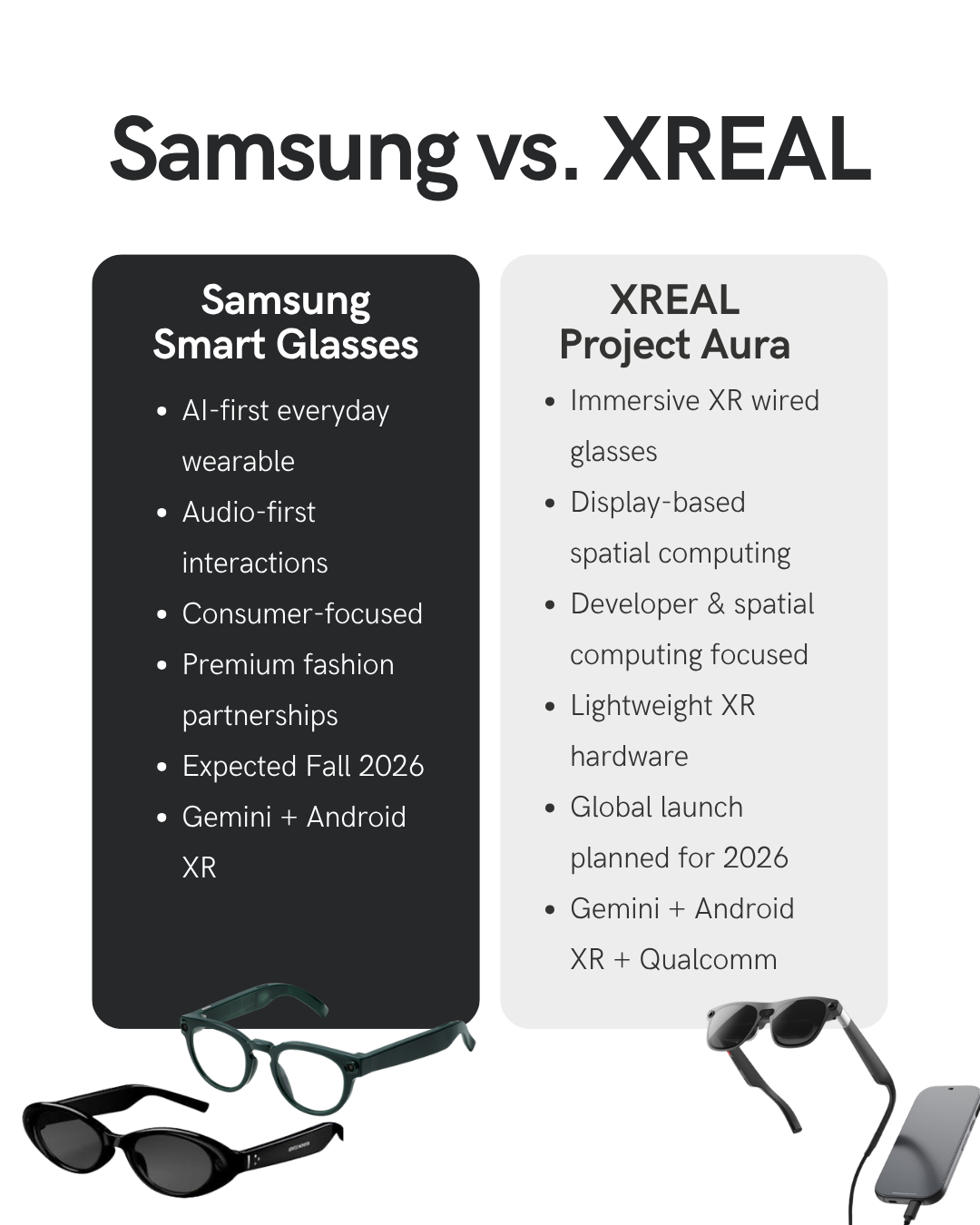
Together, these devices showcase Google’s broader Android XR strategy. Samsung aims to make AI assistance a seamless part of everyday life through familiar eyewear, while XREAL demonstrates what’s possible with immersive XR experiences and spatial computing. Both contribute to the same ecosystem, giving developers a unified platform while offering users different ways to experience Google’s vision for the future of wearable technology.