Everything You Should Know About Meta AI Glasses
The popularity of wearable technology continues to grow, with Smart Glasses becoming the hot topic of discussion in the industry. While some still question their everyday utility, the data tells a different story.
The potential is there: the popularity of smart glasses is escalating, capabilities are expanding, and what once felt too good to be true is quickly becoming a reliable platform for both users and developers.
Growing market & Opportunities for Developers
The global smart glasses market, valued at over $2.4 billion in 2025, is projected to exceed $14 billion by 2033. Driven by rapid technological advancements and increasing consumer demand, the category is moving from niche to mainstream faster than expected.
Companies like Meta are leading the way in this race. In 2025 alone, Meta sold more than 7 million pairs of its AI-powered smart glasses, proving that if done right, consumers respond. With production expected to grow to 10 million units annually by 2026, Meta AI Glasses are creating the direction the market will follow.
And where new technology grows, so does the need for developers. Not just to build the software, but to shape the experiences around it. From interactive features to AI-powered tools, developers play a key role in keeping users engaged, inspired, and coming back for more, especially at the beginning.
This creates a unique opportunity: to enter early, experiment freely, and help define what this new platform becomes.
What You’ll Learn in This Article
👉 Types of Meta AI Glasses
👉 Key features and capabilities
👉 Developer tools and access
👉 Best practices for building experiences
So, how do you actually become a Meta AI Glasses developer?
There’s a lot to unpack, especially if you’re new to the space, but this guide breaks it down into clear, practical steps. We’ve gathered the most important insights to help you understand the device, learn about the Meta AI Glasses ecosystem, and take the first steps in this space.
Latest Meta AI Updates
Meta continues to expand both hardware and software capabilities, with the most recent updates including:
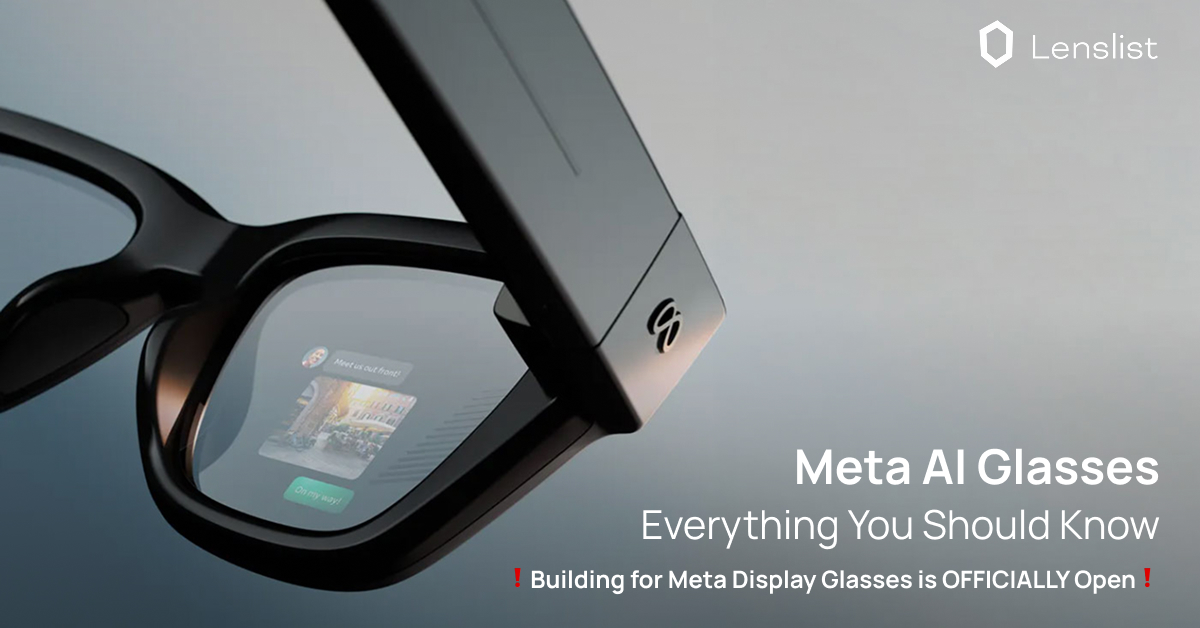
➡️ ❗NEW: Building for Meta Display Glasses is OFFICIALLY Open
➡️ Official Meta AI Glasses Reddit has been opened for Developers 👈 Join for everyday support directly from the Meta Team
➡️ Prescription-ready smart glasses for improved accessibility
➡️ AI-powered nutrition tracking, using voice and image input
➡️ In-glasses content consumption, including short-form video and music
➡️ New apps and widgets, such as calendar, reminders, and navigation
➡️ Gesture-based input, including neural handwriting
➡️ Expanded translation features, supporting 20+ languages
These updates highlight an important trend: the shift from experimental features to everyday utility.
❗NEW: You Can Now Build for Meta Ray-Ban DISPLAY!
But let’s start with WHY we’re even talking about it – Meta has officially opened third-party development for Meta Ray-Ban Display glasses, marking one of the biggest steps yet toward making AI glasses a true developer platform.
Starting now, developers can build visual experiences directly for the in-lens display using two separate paths: native mobile development through the Meta Wearables Device Access Toolkit for iOS and Android, or entirely web-based experiences using standard HTML, CSS, and JavaScript.
Alongside display access, Meta is also introducing gesture-based interaction powered by the Meta Neural Band, enabling subtle finger and hand movements as a new input method for controlling apps and content.
This expands the possibilities far beyond voice commands and hands-free capture, opening the door for real-time overlays, streaming media, utilities, micro-apps, and entirely new categories of wearable experiences.
Most importantly, developers can already build for hardware that is actively being used worldwide, making this less of an experimental concept and more of an early opportunity to help define how people interact with wearable computing in everyday life.
We can’t say it loud enough – this is THE PERFECT moment for developers to get involved.

Oscar Falmer, Wearables Developer Relations at Meta
If you want to reach millions of AI glasses users globally, we’re happy to now have a complete developer platform that covers Meta Ray-Ban and Oakley Meta glasses without display as well as Display glasses!If you own Display glasses, I strongly recommend vibe coding your own Web Apps, it’s super quick and easy to build any creative idea on your mind!
Enjoy and please share what you build with Meta glasses on our official subreddit r/MetaGlassesforDevs, excited to see what you build!
Types of Meta AI Glasses
Now, with the basics. The types. What makes Meta’s approach to smart glasses different starts with the design. Meta AI Glasses’ purpose is to bring technology into real life, not the other way around.
Meta AI Glasses are intentionally lightweight and designed to look and feel like regular eyewear. Instead of standing out as a piece of tech, they fit into personal style, functioning as both a tool and a fashion accessory.
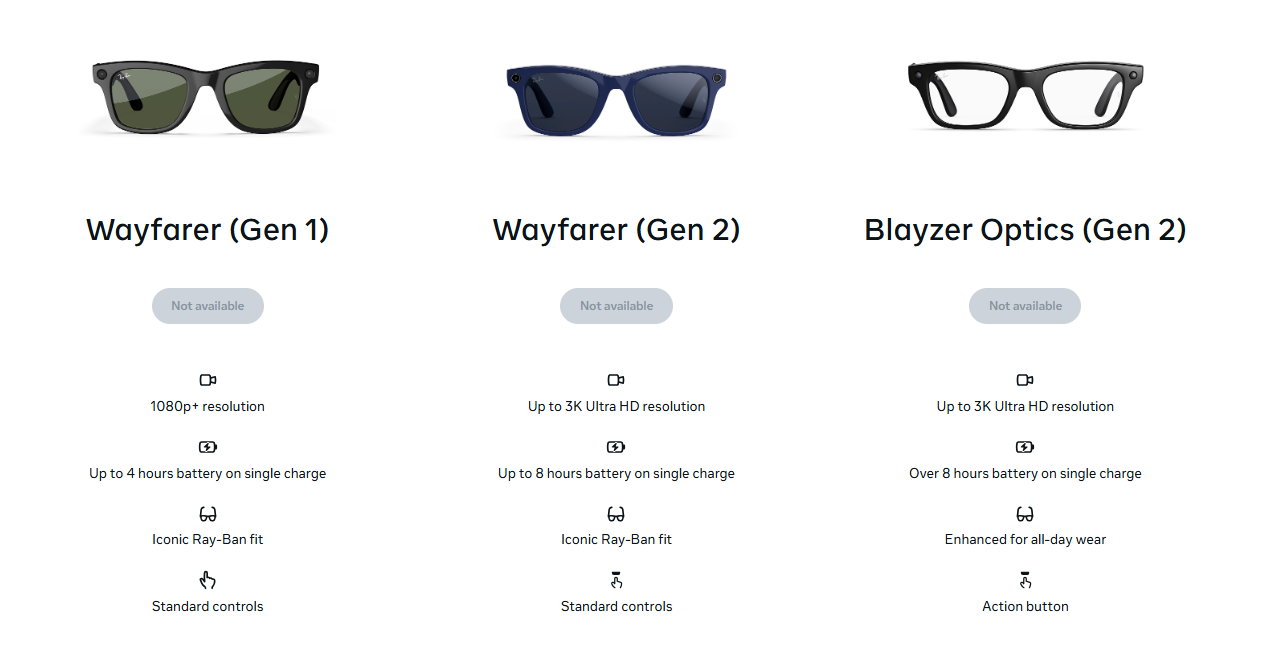
Ray-Ban Meta Glasses
Developed in collaboration with Ray-Ban, these glasses combine recognizable design with AI-powered functionality. Available in multiple styles and lens options, they’re built for everyday use.
The latest generation, released in September 2025, introduces several key upgrades:
👉 Up to 8 hours of battery life
👉 3K Ultra HD video recording
👉 Enhanced Meta AI capabilities
 Source: Meta
The latest news from Meta announces prescription-ready versions. Instead of requiring separate lens customization, these models are designed to support a wide range of prescriptions out of the box. Combined with ergonomic improvements, like adjustable nose pads and flexible hinges, they’re optimized for all-day comfort.
 Source: Meta
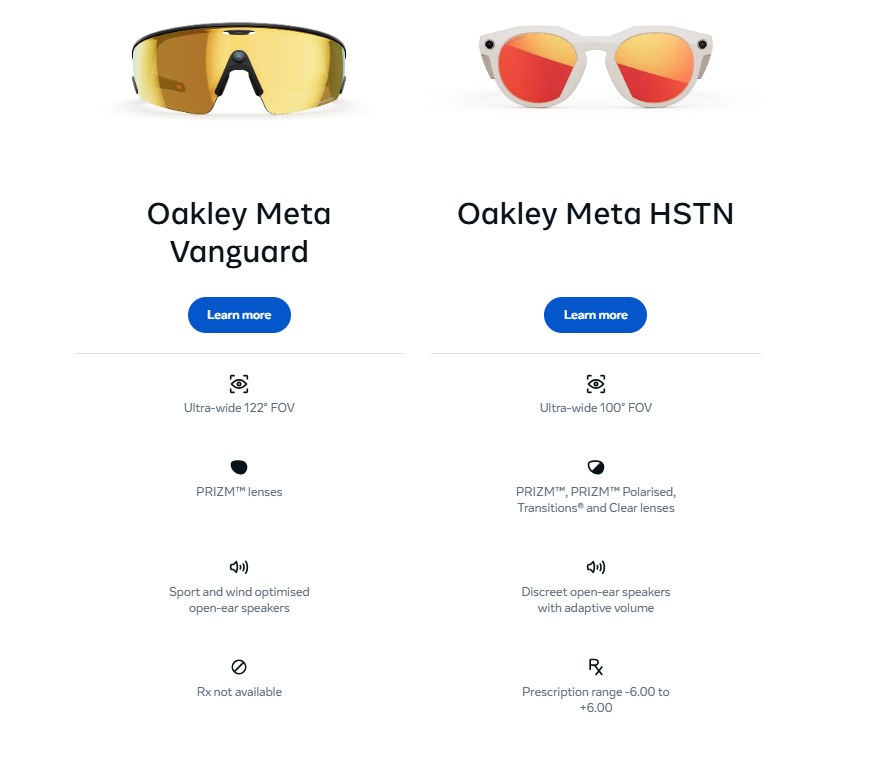
Oakley Meta AI Glasses
Designed in partnership with Oakley, this line focuses on performance and physical activity. These glasses are designed for users who want to track, capture, and improve their workouts and movement.
Key features include:
👉 Hands-free photo and video capture
👉 Ultra-wide 12MP camera
👉 Open-ear audio system
👉 Integration with fitness tracking devices
 Source: Meta
This makes it the best fit for sports, training, and outdoor experiences, where real-time insights and hands-free interaction, all through your glasses, become your personal trainer.
Meta Ray-Ban Display
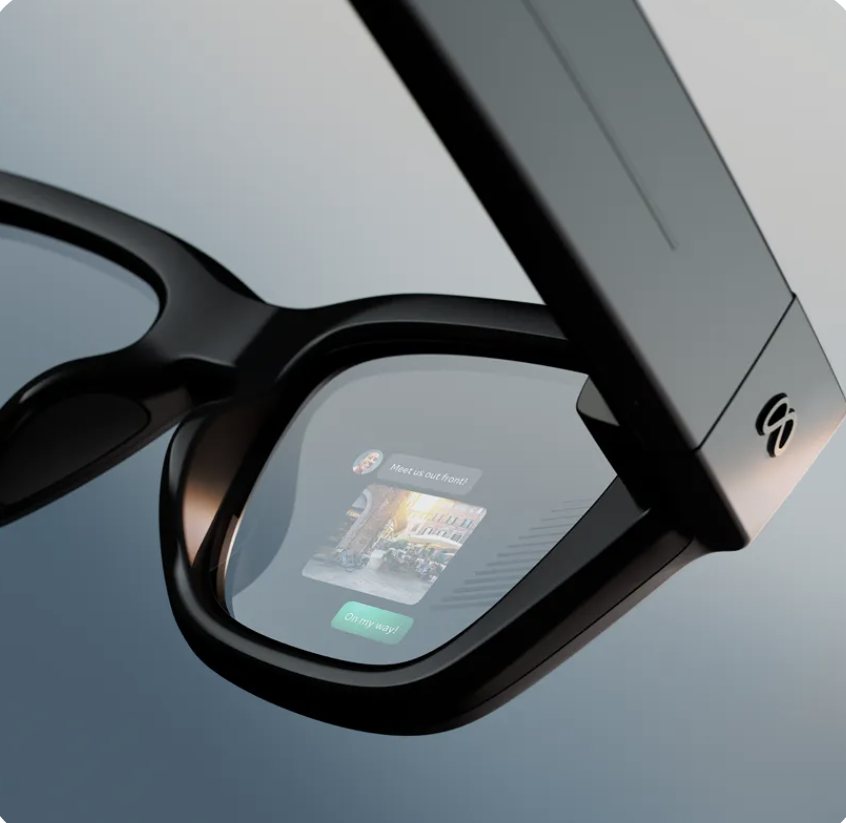
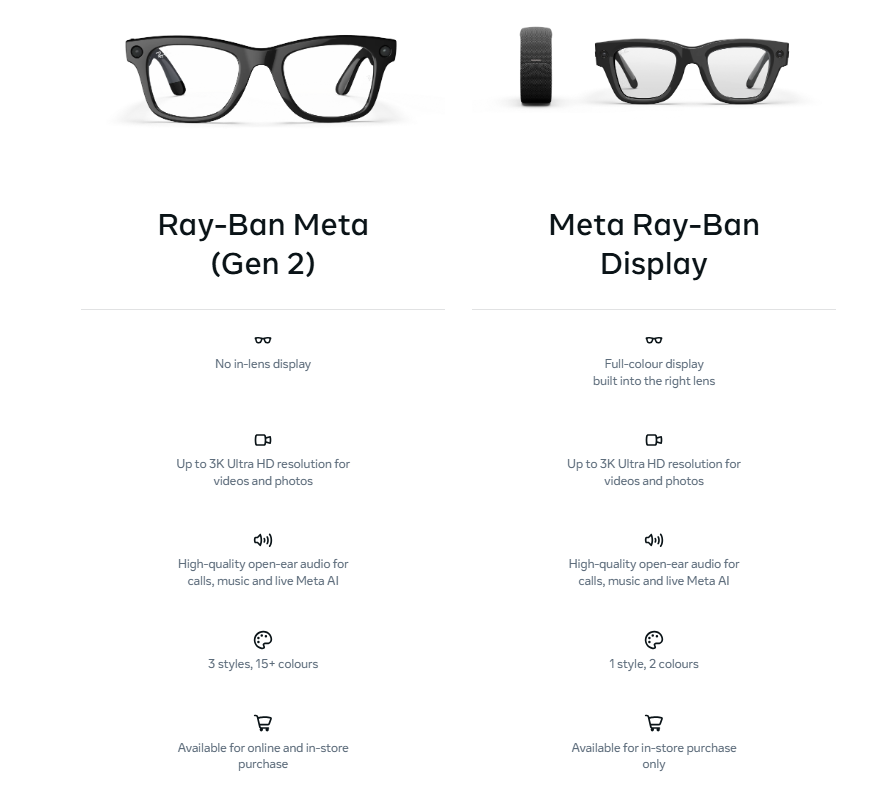
The Meta Ray-Ban Display glasses were unveiled by Mark Zuckerberg at Meta Connect 2025 on September 17, 2025. Within two weeks they became available for purchase in the US, priced at $799 USD, and featuring a full-color display on the right lens and accompanied by a neural band controller.
 Source: Meta
This model introduces a new form of interaction: an in-lens display accompanied by the Meta Neural Band (the most groundbreaking update compared to other Meta glasses models) allows users to control digital content through simple and discrete hand gestures, instead of having to take out their smartphone each time.
With a built-in 600×600 full-colour display in the right lens and the neural band, users can:
👉 Read messages and notifications
👉 View images and videos
👉 Access real-time translations and captions
👉 Control media and apps without using a phone
 Source: Meta
Combined with gesture controls and wearable input devices, the experience becomes more intuitive and immersive. The digital content becomes a natural part of the users’ world, where interactions happen naturally within the field of view.
Orion AI Glasses (Prototype)
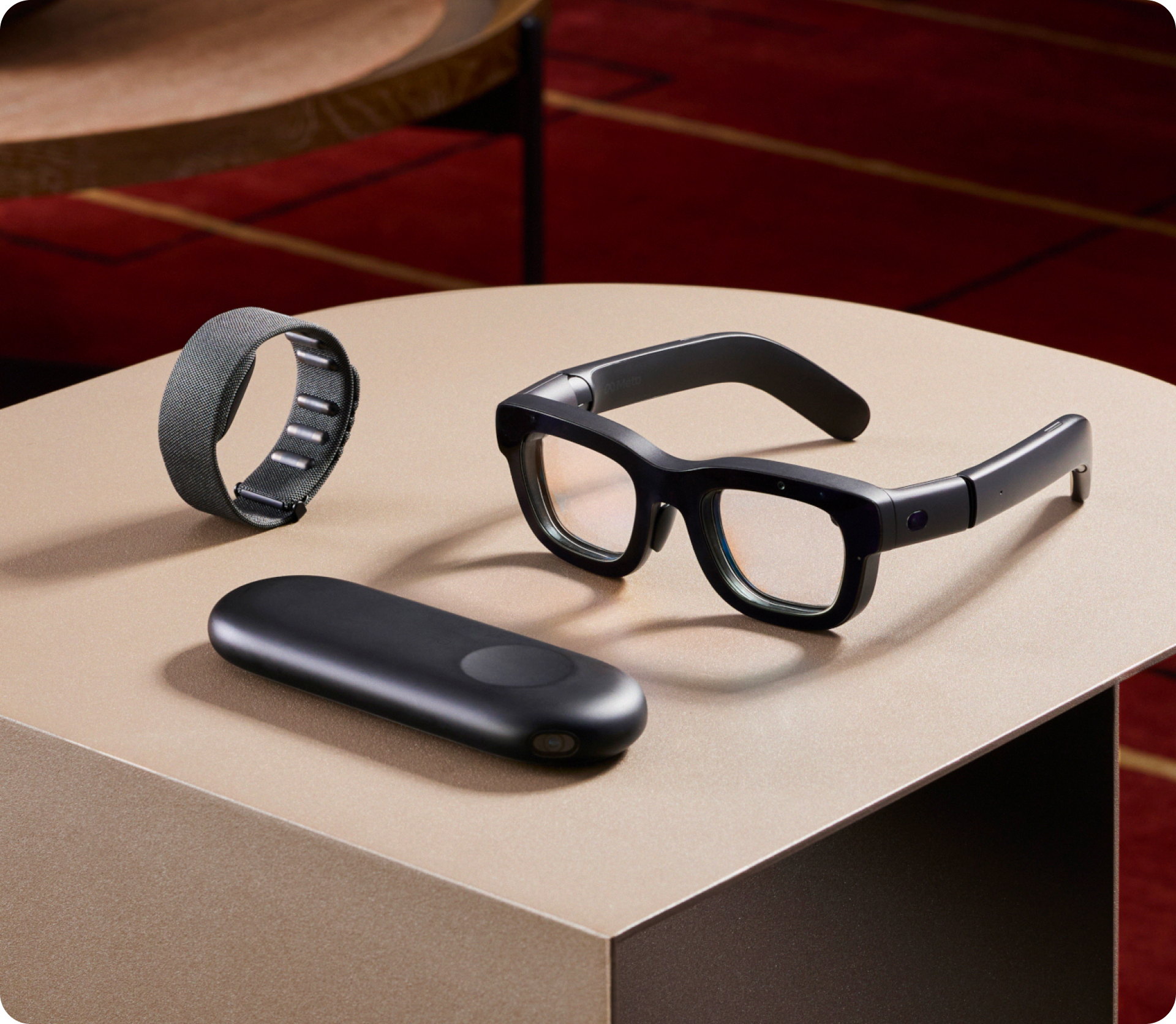
Orion represents Meta’s long-term vision for smart glasses with Augmented Reality as the main tech next to AI. While still in the prototype phase, it combines AI and AR into a single, fully immersive device.
 Source: Meta
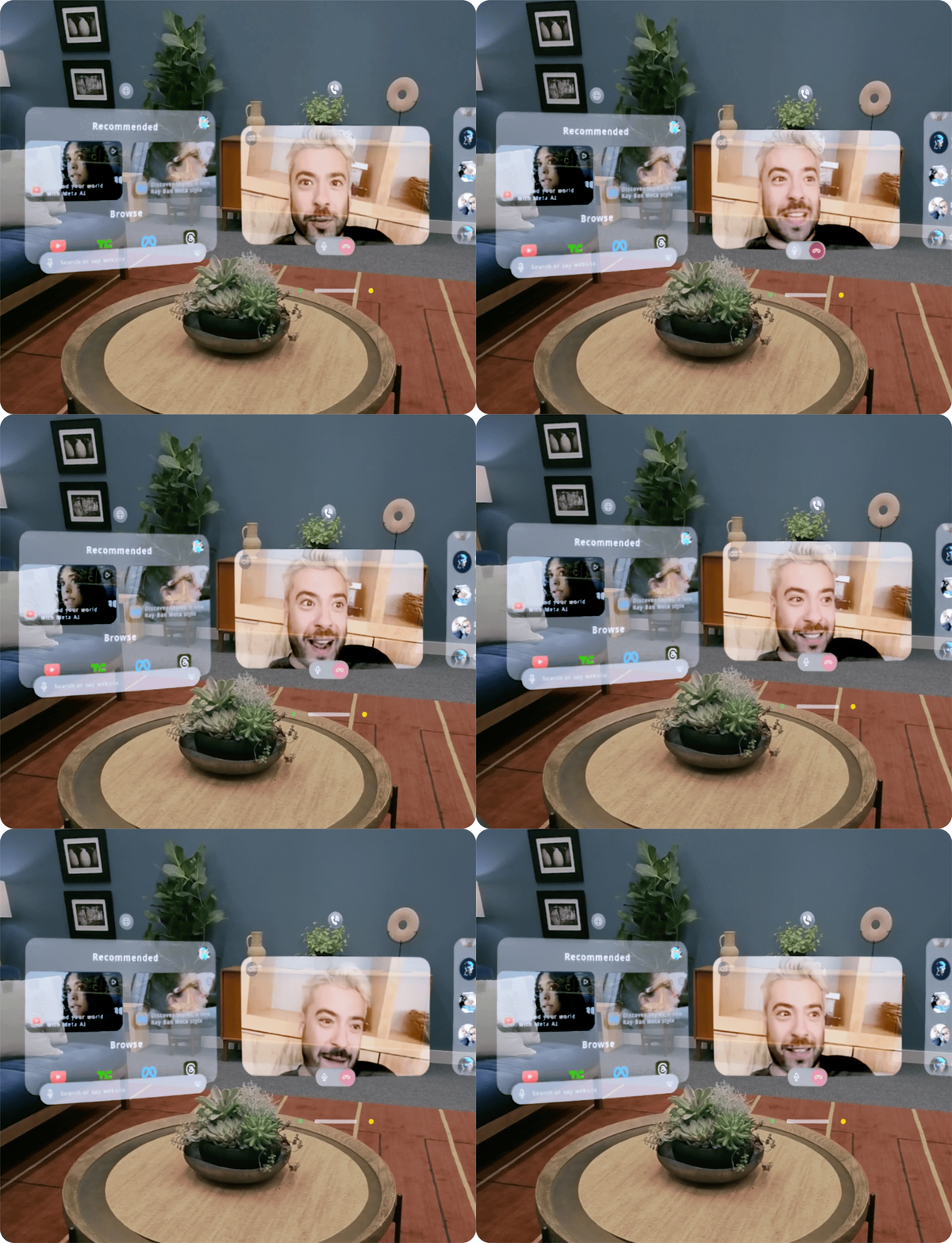
It directly resonates with Meta’s main mission: Moving digital content beyond screens entirely and blurring the barrier between physical world and virtual reality. With contextual AI and spatial computing, Orion aims to:
👉 Blend digital and physical environments
👉 Provide real-time, situational assistance
👉 Enable fully immersive AR experiences
 Source: Meta
At first glance, it might seem similar to the AI Glasses, but while Ray-Ban and Oakley focus on AI-powered assistance through audio, camera, and hands-free capture, and the Display version introduces in-lens visuals for notifications, messages, and lightweight apps, Orion moves further.
Instead of simply assisting or displaying information, it transforms the surrounding environment into an interactive digital space, where the digital content exists spatially and can be placed, manipulated, and experienced directly in the real world.
It’s an ambitious direction, but one that signals where the industry is heading.
Quick Comparison: Meta AI & AR Glasses
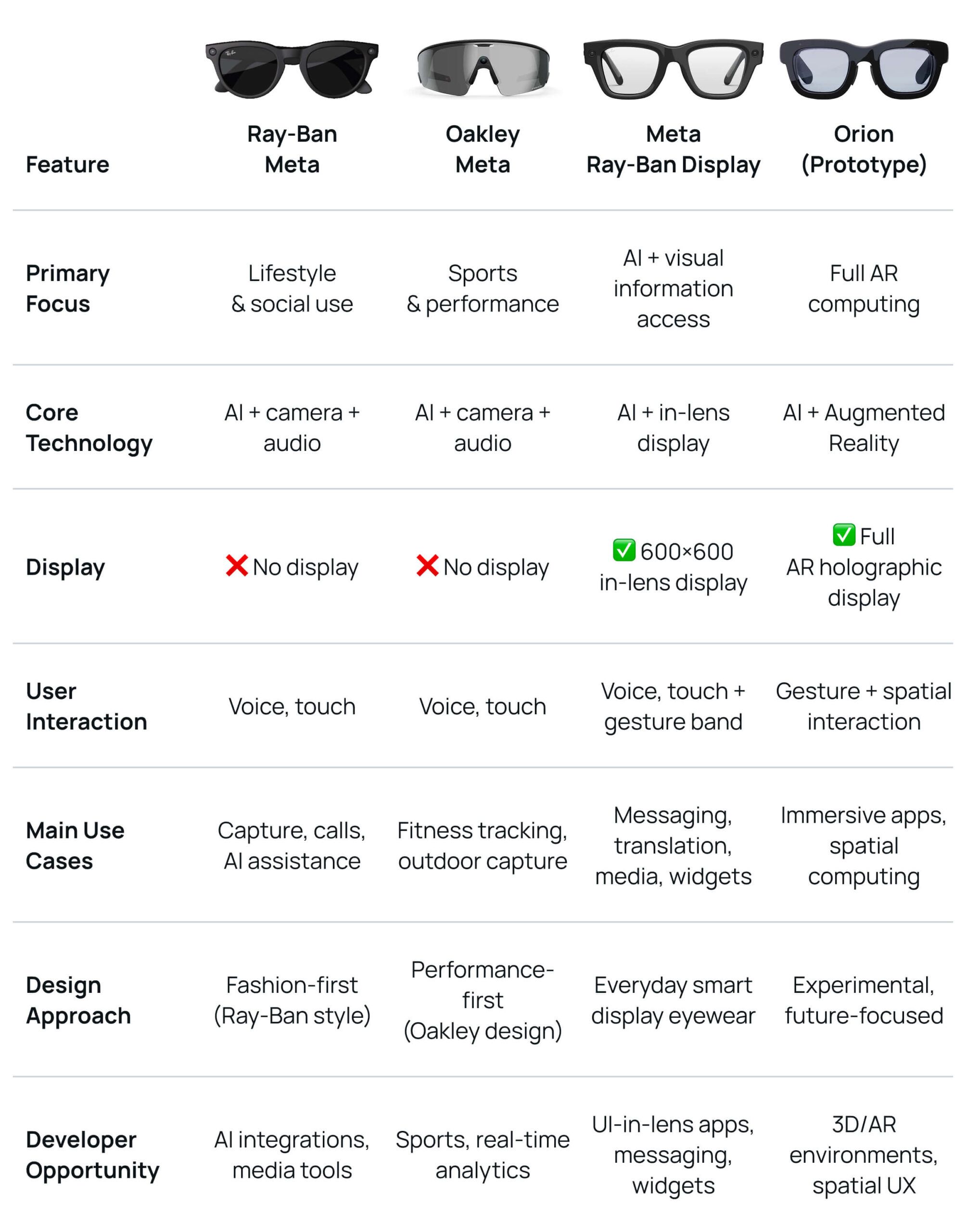 Meta AI Glasses: Comparison by type
Meta AI Glasses Developer Ecosystem
For a platform like this to succeed, hardware alone isn’t enough. It depends on developers building new experiences, keeping the device alive with constant innovation.
Meta Wearables Developer Center
Meta Wearables Developer Center is the “headquarters”. A web portal that helps developers to manage their organizations, project registration, team members, and release channels.
👉 Learning and documentation
👉 Prototyping and testing
👉 Sharing and scaling integrations
It’s designed to help developers move quickly from idea to working experience, and manage their projects.
As a developer, how do I gain access?
👉 Register your organization
👉 Set up teams and permissions
👉 Enable developer mode
👉 Create and register your project
Once set up, you can begin testing and sharing your integrations.
Learn more about the process here.
Meta Wearables Device Access Toolkit
The Meta Wearables Device Access Toolkit is the core SDK enabling direct integration with Meta AI glasses. It allows building mobile apps that connect to the hardware sensors of the device.
It provides:
👉 Access to camera, audio, and sensors
👉 Support for iOS and Android
👉 Tools for simulation and testing
👉 Secure, user-controlled permissions
Learn more here.
Together, the Device Access Toolkit and Developer Center allow developers to build iOS/Android apps that access Ray-Ban Meta glasses’ camera, microphone, and speakers.This opens the door to building AI-powered assistants, real-time analytics tools, social, and content-sharing experiences
NEW ❗Web Apps
Web Apps are a second way to build experiences for Meta Ray-Ban Display glasses using standard HTML, CSS, and JavaScript. No new framework or language is needed.
They run directly on the glasses and are designed for quick, lightweight experiences like games, tools, guides, or simple utilities.
At launch, Web Apps can access:
👉 Motion and orientation data
👉 GPS from a connected phone
👉 Input from Meta Neural Band and capacitive touch
👉 Local storage
Developers can build and test in a browser, then deploy to a URL and install it on glasses via the Meta AI app in Developer Mode. On-device testing requires Meta Ray-Ban Display glasses paired with the Meta AI app.
This makes Web Apps a fast, flexible way to prototype and ship simple on-glasses experiences using familiar web tools.
Resources for Developers
To support developers at every stage, Meta offers:
👉 Detailed documentation and API references
👉 SDKs and sample applications
👉 Community forums and collaboration spaces
👉 Project management tools for teams
Learn more here.
Opportunities for Developers
Beyond building experiences, Meta is also opening pathways for developers and organizations to join the real-world impact with AI glasses through dedicated funding programs and early access initiatives.
AI Glasses Impact Grants
Across both Accelerator and Catalyst tracks, the initiative highlighted strong real-world adoption of wearable technology in areas such as education, healthcare, accessibility, and community development.
While this cycle is no longer open, Meta has indicated that more opportunities and support programs are expected in the future, so developers and organizations working in this space should stay tuned for upcoming announcements.
AI Glasses Impact Catalyst Grants
For developers or organizations proposing new, high-impact applications built using Meta’s SDK. This track focuses on strong technical teams with ideas that can deliver measurable social or economic value at scale.
👉 5 grants awarded
👉 Funding up to $200,000
👉 Includes direct support from Meta
👉 Invite-only selection process
Early Access Program
(Available only in the US) For developers who want to build ahead of the curve, the Early Access Program provides first access to new features and updates for Meta AI glasses. Participants can test upcoming capabilities and share feedback that directly influences product development.
How to join:
➡️ Open the Meta AI app
➡️ Go to Devices 👉 Settings
➡️ Select your paired device
➡️ Scroll to Early Access
➡️ Tap Join Early Access
Once enrolled, new experimental features will appear in the Early Access section of device settings as they become available. Developers are notified as updates roll out, allowing them to continuously test and refine their integrations.
Where Can I Buy Meta AI Glasses?
Both Ray-Ban and Oakley Meta AI Glasses are not yet available in every region. Here’s a list of countries where you can buy the glasses either through the Meta AI Glasses page or other certified retailers: United States, Canada, Ireland, Austria, Belgium, Spain, Germany, Finland, Norway, Denmark, Sweden and Australia. France, UK, and Italy have been announced as next available countries.
When it comes to Meta Ray-Ban Displays, to get your hands on those, first you’ll need to schedule a live demo using by going to the scheduling page here. Currently, you can experience the demonstration in different locations, but only across the US.
Meta’s representatives have hinted that the access will spread to more countries and regions soon. Just like yourself, we can’t wait to hear an update on this as soon as possible!
The Future of Meta AI Glasses
At this stage, Meta AI Glasses are becoming an established platform, rather than just an experiment. And like with every platform before (from smartphones, to social media), the future of Meta AI Glasses will be defined by developers, and what they will choose to build on top of it.
The tools are already there – and with the support from Meta, and the growing community of users, it’s the perfect moment to get involved and have a real impact on the user experience before it’s fully established.
Those who start now won’t just adapt to the next step in technological evolution, they’ll be the ones defining it.
⭐⭐⭐
Want to bring AR into your marketing? 🔍 Use the AR Brainstormer to generate quick ideas, explore the AR Search Engine for inspiration, or book a consultation with us – we’d love to help!
🧑🎨Creators can also showcase their work on XR Bazaar and build a standout portfolio in the XR industry. Get discovered by brands and agencies looking for fresh talent in creative tech 🛠️